

But in a few years’ time, I discovered the real side of this term when I went to see my ailing grandfather in the ICU. I was made to wear a hospital head mask, gown and cover my shoes. That was the moment when I realized that the contamination goes well beyond the evident smoke and dusk that we are surrounded with. What I didn’t know was that several industries, facilities and factories work at an established cleanliness level to ensure optimum safety, quality and efficiency in operations.
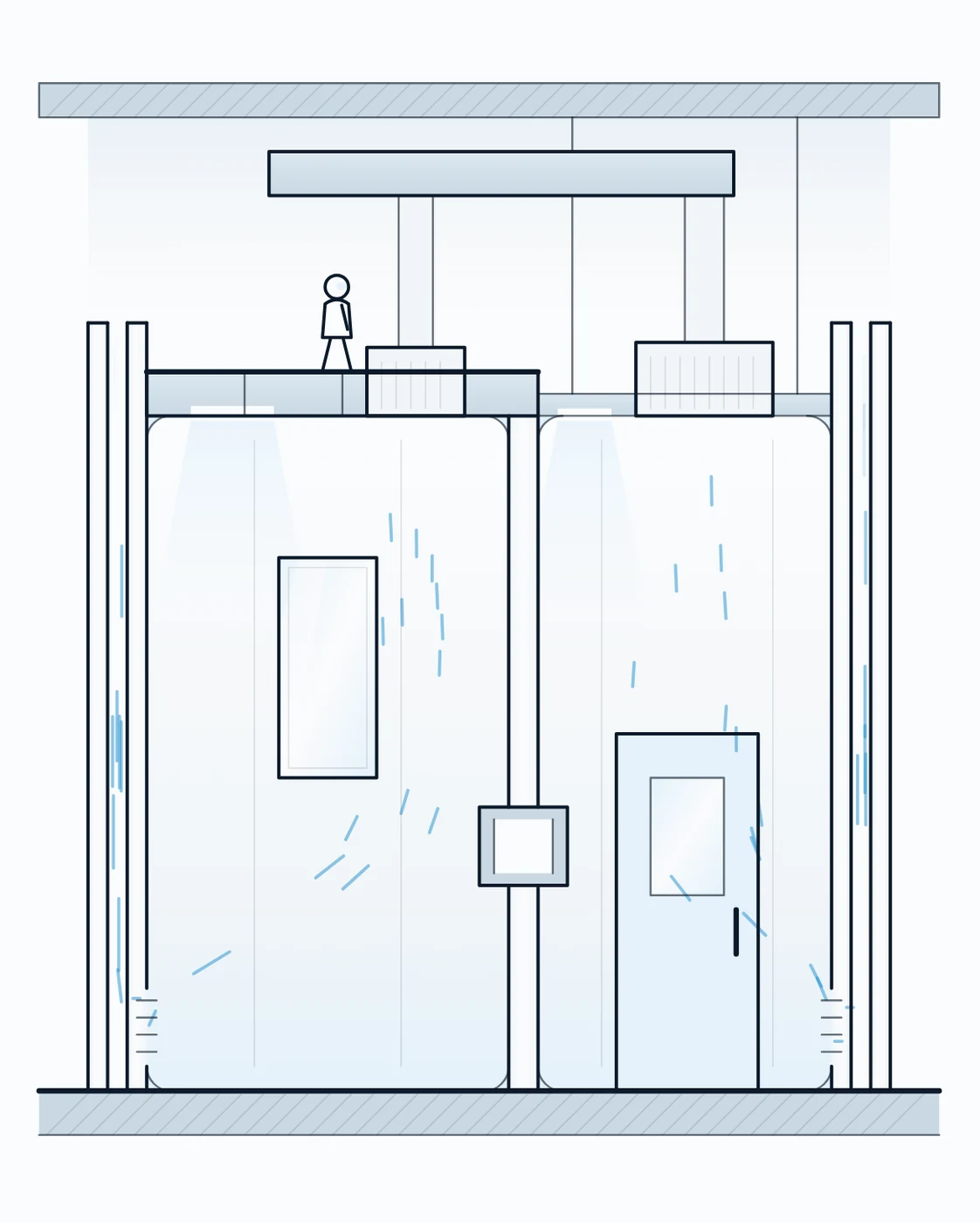
And as I went along studying the matter more, I got acquainted with ‘clean room’, a term that speaks about what it actually stands for, and that is ‘being clean’. The concept of having a ‘room which is clean’ dates back to the time when it was a mere air-conditioned closed space that recycled air particles from the turbulent air within the room. However, with the passage of time, there came a pressing need to eliminate the potential articles that could enter, exit, return and remain within the confines of the room. This finally led to the advent of a ‘cleanroom’.
Today, the need for a cleanroom may broadly be the same for every industry with a common objective of minimizing the presence of contaminants, but each cleanroom differs in terms of the nature of criticality and the related protocols.
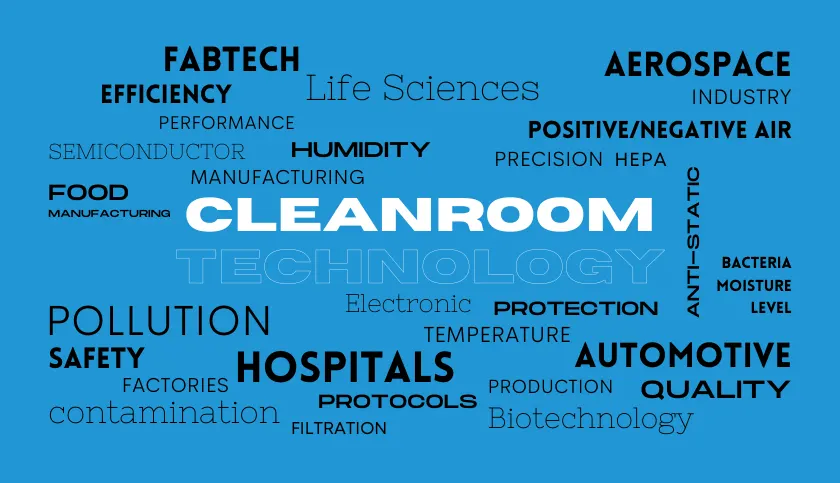
Cleanrooms are designed for all kinds of conditions, namely, HEPA filtration, positive/negative air pressure, temperature control, monitoring systems, amongst others. In adherence to the relevant laws on the one hand and enforcing industry standards on the other, some key points pertaining to various industries are brought out below:
- Hospitals– Considering the already compromised immune system of the patients, a hospital cleanroom is the most essential and efficient practice to curb the scope of contamination. Since the time when cleanroom was confined to only surgical units, the level of cleanliness has evolved to a large extent, with every hospital today installing cleanroom facilities to the areas that remain exposed to bio-hazardous products.
- Aerospace & Automotive Industry – This industry involves a comprehensive line of products that require a great deal of precision for safe operation and delivery of sensitive and tiny components. The need for a controlled environment arises as a result of escaping potential roadblocks in the form of dust and gas molecules that may cause damage to production. The cleanrooms act as watchdogs and closely control the humidity and temperature.
- Semiconductor/Electronic Manufacturing and Nanotech Cleanrooms – The varied functional areas for interdisciplinary research, computer components and microelectronics call for a versatile cleanrooms facility that can monitor critical factors like pressure and particle levels. Necessary air handling at regular intervals is also carried out so as to support operations of the cleanroom through effective and timely replacement of air.
- Life Sciences and Biotechnology Cleanrooms – Samples form an integral part of life sciences and biotechnology that needs to be given closer attention so that the same doesn’t get compromised by the particulates in the environment. The cleanrooms are optimized carefully with coving to withstand regular cleaning, sanitization and maintenance of the space.
- Electronic part production – Sensitive electronics form an important part of the electronic assembly cleanrooms. Even a minuscule dusk particle via temperature, static or humidity can have a direct implication on the product. Cleanrooms products such as anti-static coveralls, anti-static wipes can promise added efficiency in the successful implementation and operation of the electronic parts, thereby enhancing the overall performance of the facility and the organization in general.
- Food Manufacturing – When it comes to food, it goes without saying that quality is of utmost importance and highest concern. Certain food manufacturing processes such as aseptic processing and packaging are not feasible to operate in closed machines and may invite airborne particles on the food. Thus, there is always a dire need of maintaining high hygiene standards to curb the growth of bacteria, fungi or moulds at bay. Stringent cleanliness levels through effective implementation of cleanroom technology play a pivotal role in regulating the humidity, moisture level, temperature, air pressure, amongst others. This keeps the food products safe from contamination and plays a crucial role in the protection of an individual’s health and overall wellbeing.
- Military Applications – Military works on a wide spectrum of projects, procedures and experiments and thus relies heavily on cleanroom systems which ensure that the creation of ideas and innovations remain barrier-free. The cleanroom also provides enhancement of highly sensitive military equipment so as to maintain the integrity of the project used amongst the armed forces.
- Labs & Research Facilities – University laboratories routinely conduct research and experiments, but the same may not be operating in an environment controlled manner. With cleanrooms, the level of impurities, cross-contamination and other variables that can have impeding effects on experiments can be significantly reduced, thereby enabling sufficient protection to conduct tests and trials by the researchers.
- Optics Applications – Cleanrooms are the best solution to maintaining standard necessities for the manufacturing of optical and microelectronic components. A controlled environment helps eliminate severe consequences arising due to humidity, temperature and particulates.
And lastly, there is a pharmaceutical cleanroom which is the key driver for attaining an optimum level of cleanliness in the manufacturing and processing of medicinal products. This involves minimizing the internal generation of contaminants right from humans, processes, facilities, equipment to pollutants such as dust, airborne and aerosol particles.
For Fabtech, a cleanroom is essentially a disciplinary approach which we plan, design and process bearing the under-mentioned four p’s:
- Precision
- Protection
- Performance
- Protocol
With an extensive portfolio spanning several years in offering cleanroom facilities, we optimize solutions as per your need and specification. So next time you think of building a cleanroom, think of Fabtech!
Connect with us. We would love to learn about you!